Application Fields and Professional Selection & Installation Guide for PC Polycarbonate Solid Sheet
PC polycarbonate solid sheet, with its comprehensive performance advantages including impact resistance, high light transmittance, strong weather resistance, flame retardancy and sound insulation, is widely used in numerous fields such as architectural decoration, transportation, agricultural facilities, municipal engineering and emerging high-tech industries. Understanding the selection points for different application scenarios and professional installation methods is crucial for fully realizing material performance and ensuring long-term service life.
1. Major Application Fields
Building Lighting Field: PC solid sheet is an ideal material for building lighting roofs and curtain walls, suitable for stadium lighting roofs, commercial complex skylights, industrial plant lighting strips, warehouse roof lighting, station canopies, school carports and overpass canopy roofs. With its lightweight, high strength, thermal insulation and energy-saving characteristics, PC solid sheet significantly reduces building energy consumption while improving lighting quality. Products are widely used in office buildings, department store lighting roofs and subway entrances.
Transportation Sound Insulation Field: PC solid sheet offers remarkable sound insulation, providing 5 to 9 decibels higher sound insulation than glass of the same thickness, making it the preferred material for highways, urban elevated roads and railway sound barriers. It is also suitable for transparent components in transportation vehicles including aviation transparent containers, motorcycle windshields, aircraft, trains, ships, automobiles and speedboats.
Agricultural Facilities Field: PC solid sheet is widely used in agricultural greenhouses, farming sheds and eco-restaurant roofs. Its excellent light transmission and thermal insulation effects provide ideal lighting and temperature conditions for crop growth. The UV coating on the panel surface effectively blocks ultraviolet rays, extending service life, with outdoor light transmittance loss of only 6% to 10% over ten years.
Municipal and Public Facilities Field: Suitable for telephone booths, advertising light boxes, exhibition displays, bus shelter canopies, garden pavilions, rest area decoration, and interior and exterior decoration of commercial buildings. PC solid sheet is also applicable to industrial scenarios including instruments, meters and high and low voltage switchgear panels.
Emerging Application Fields: With technological advancement, the applications of PC solid sheet have extended to new energy vehicle components, building-integrated photovoltaics, smart greenhouses, medical health equipment and communication electronics, demonstrating broad development prospects.
2. Professional Selection Guide
Thickness Selection: The commonly used thickness range for PC solid sheet is 1.5mm to 15mm, with 4mm to 10mm being the most common specifications. Thinner panels (1mm to 3mm) are suitable for indoor partitions, light box panels and other light-load scenarios. Medium thickness (4mm to 8mm) is suitable for carports, canopies, lighting strips, sound barriers and other conventional outdoor applications. Thicker panels (10mm and above) are suitable for bulletproof protection, heavy-load lighting roofs and other higher requirement scenarios.
Color Selection: Standard colors include transparent, milky white, lake blue, grass green and tea brown. Transparent panels offer the highest light transmittance, suitable for maximizing natural lighting. Milky white and frosted panels effectively scatter light and reduce glare, suitable for locations requiring privacy or softer light.
UV Coating Treatment: PC solid sheet used outdoors must be selected with UV co-extruded coating. UV coating effectively resists yellowing and aging caused by ultraviolet radiation, ensuring the panel maintains excellent light transmission performance and mechanical strength for 10 to 15 years.
Brand and Quality Standards: When selecting products, priority should be given to those meeting the requirements of the new national standard GB/T 44570-2024, with attention to key performance indicators including impact strength, light transmittance and temperature range. Major brands in the market include Makrolon, Gulai’er and Unicorn, each with different technical characteristics, pricing strategies and service capabilities.
3. Key Installation Process Points
Allowance for Thermal Expansion and Contraction Gaps: The linear expansion coefficient of PC solid sheet is 7×10⁻⁵ cm/cm/℃. Sufficient thermal expansion space must be reserved during installation. It is generally recommended to reserve 3mm to 5mm of expansion gap per meter of length, or 5mm to 10mm of expansion space, to prevent panel deformation or cracking caused by drastic temperature changes.
Use of Specialized Accessories and Sealing: Specialized waterproof screws and EPDM rubber gaskets should be used for panel fixation, avoiding direct drilling which may cause stress concentration and water leakage risks. For embedded installation, the panel edge should extend at least 25mm into the fixing frame. Neutral silicone sealant should be used for sealing. Before installation, the protective film at the panel edge and surrounding 5cm to 10cm should be removed to ensure good bonding between sealant and PC panel.
Protection of UV Coating: The UV protective coating layer must not be scratched during handling and installation. The UV coating side must face the sunlight direction to ensure effective UV resistance.
Bending Installation Specifications: During cold bending, the minimum bending radius should not be less than 175 times the panel thickness. For example, a 10mm thick panel requires a minimum bending radius of approximately 1750mm. During summer installation, smaller clearance gaps may be appropriate, while during winter installation, larger gaps should be reserved to compensate for thermal expansion and contraction effects.
Secondary Film Protection: After installation, secondary film protection can be applied, only to be removed upon project completion, to prevent scratching or contamination of the panel surface during construction.
4. Processing and Customization Services
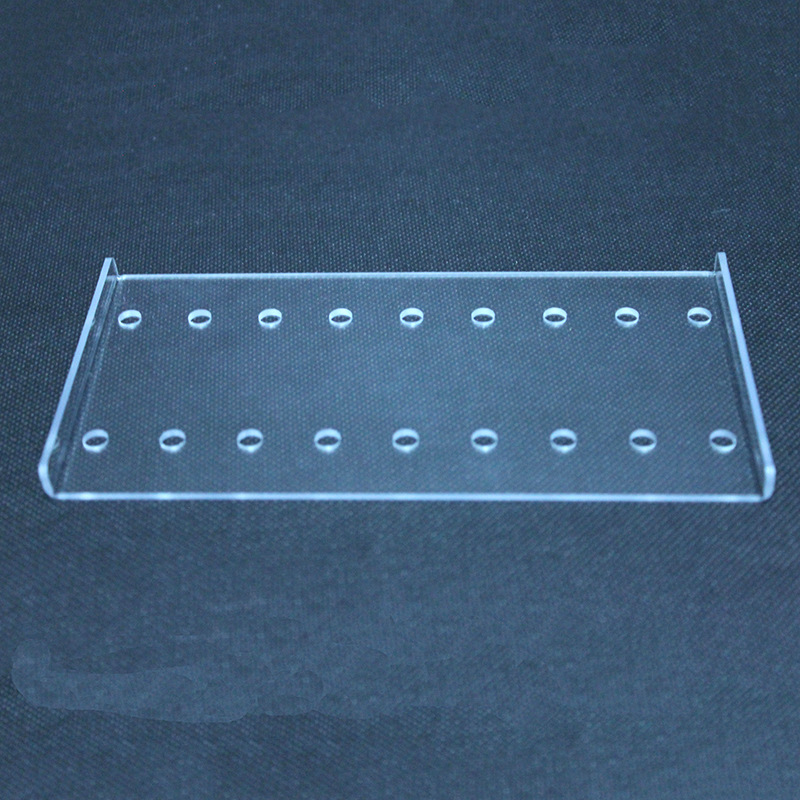
PC solid sheet supports various processing methods including die-cutting, laser cutting, engraving, hot bending forming and bonding assembly. Professional manufacturers can provide customized cutting services according to customer requirements, supporting customization of special colors and surface textures. Processing accuracy can achieve thickness tolerance control within 0.1mm, with hot bending accuracy reaching 0.5mm, meeting various precision engineering requirements.
5. Quality Certifications and Warranties
High-quality PC solid sheet products should pass EU CE certification and US UL certification, meet the requirements of national standard GB/T 44570-2024, and achieve B1 flame retardancy level or UL94 V-0 level. Most professional manufacturers provide 5 to 10 years of product quality warranty, with some high-end brands offering up to 15 years of outdoor weather resistance performance guarantee.