PMMA Acrylic Sheet – Complete Selection Guide and Processing & Maintenance Manual
PMMA acrylic sheet, with its high transparency, lightweight strength and excellent weather resistance, has become a preferred material choice in advertising displays, architectural decoration, industrial components and home goods. However, to fully realize the performance advantages of acrylic sheet, proper selection, professional processing and scientific maintenance are all essential. This article provides a complete practical guide to acrylic sheet selection, core processing techniques and daily maintenance considerations.
1. Acrylic Sheet Selection Guide
Correctly selecting the right acrylic sheet type and specification is the first step to ensuring application effectiveness and cost efficiency. The following dimensions require special attention during selection.
Process Selection: Cast Sheet or Extruded Sheet?
Cast sheet and extruded sheet are the two mainstream production processes for acrylic sheet, each with distinct characteristics. Cast sheet is produced through bulk polymerization initiated by a catalyst, resulting in more regular molecular chain alignment, thus offering higher light transmittance, superior surface hardness and stronger weather resistance, suitable for high-quality applications such as optical lenses, premium display cases, artwork protection and precision instrument panels. Extruded sheet is produced through continuous extrusion, offering tighter thickness tolerance control, higher production efficiency and more economical pricing, suitable for high-volume standardized products such as advertising light boxes, display racks and general interior decoration. If your project has high requirements for optical quality and durability, cast sheet is the better choice; if cost efficiency and high-volume production are priorities, extruded sheet has the advantage.
Thickness Selection: Based on Application Requirements
Standard thickness for acrylic sheet ranges from 2mm to 20mm, with different thicknesses corresponding to different applications. 2mm to 3mm thin sheets are suitable for interior partitions, picture frames and light box panels in light-load scenarios, with low processing difficulty and economical cost. 4mm to 6mm medium thickness sheets are suitable for display racks, small protective covers and bathroom partitions in conventional applications, achieving good balance between strength and processability. 8mm to 10mm thick sheets are suitable for large display cases, machine guards and furniture panels requiring higher load-bearing capacity. 12mm and above extra-thick sheets are suitable for aquariums, bulletproof protection and art installations with stringent structural strength requirements. When selecting thickness, choose the most economical option that meets application requirements to avoid cost increases from over-engineering.
Color and Functional Customization
Acrylic sheet offers rich color options, with standard colors including clear, tea brown, blue, red, black and yellow, with custom colors available according to Pantone codes. In functional customization, anti-static acrylic sheet offers surface resistance values of 10⁶ to 10⁸ ohms with light transmittance exceeding 90%, suitable for cleanroom partitions, equipment covers and test fixtures requiring electrostatic protection. Flame-retardant acrylic sheet meets UL 94 HB or higher fire safety ratings, suitable for locations with strict fire safety regulations. High-wear-resistant acrylic sheet achieves pencil hardness of 4H or above, suitable for frequently touched and wiped scenarios. UV-resistant acrylic sheet is specifically designed for long-term outdoor use, effectively delaying yellowing and aging.
Comparison of Acrylic Sheet with Other Transparent Materials
In practical selection, acrylic sheet is often compared with polycarbonate solid sheet and ordinary glass. Acrylic sheet achieves light transmittance of up to 92%, the highest among the three, with the best optical clarity. Polycarbonate sheet achieves 75% to 89% light transmittance, slightly lower than acrylic but still offering good performance. In impact resistance, acrylic sheet offers 6 to 17 times the impact strength of ordinary glass, while polycarbonate sheet offers even higher impact resistance at 30 to 50 times that of acrylic, making polycarbonate more advantageous in scenarios with extremely high impact requirements. In weight, both acrylic and polycarbonate sheets are approximately half the density of glass, significantly reducing structural burden. In weather resistance, both offer excellent outdoor durability, with acrylic excelling in optical stability and polycarbonate excelling in impact resistance and wide temperature tolerance. In pricing, solid acrylic sheet market reference prices range from RMB 80 to 200 per square meter, while double-layer hollow polycarbonate sheet ranges from RMB 35 to 80 per square meter and four-layer and above from RMB 60 to 150 per square meter. When selecting, make trade-offs based on core requirements of the specific application: if optical clarity is the primary consideration, acrylic sheet is the clear choice; if impact resistance is extremely critical, polycarbonate sheet is more suitable; if cost sensitivity is high with basic requirements, ordinary glass may be an alternative.
2. Core Acrylic Sheet Processing Techniques
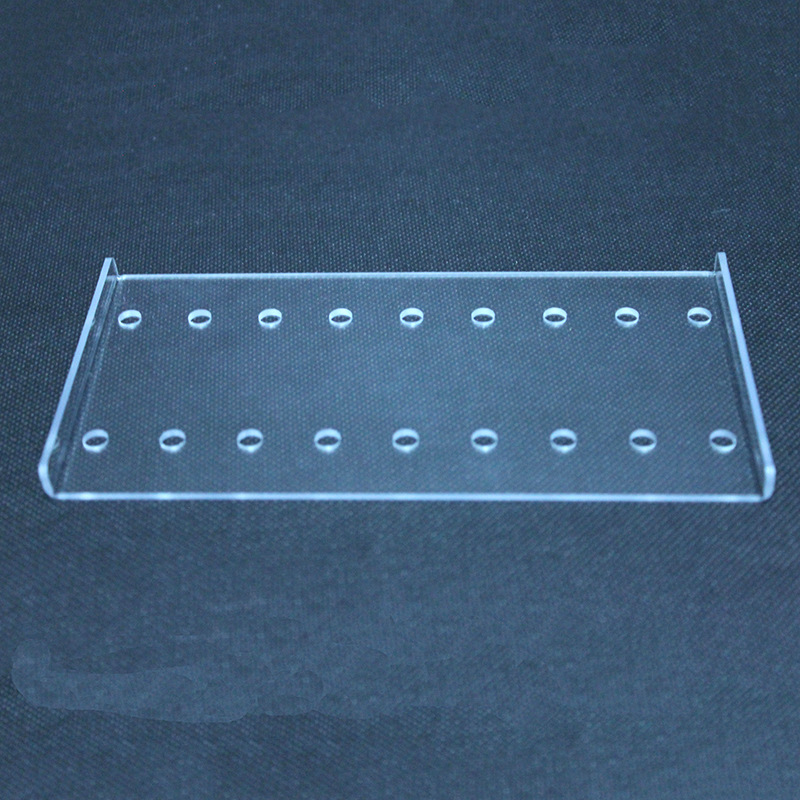
Acrylic sheet is renowned for its excellent processability, with core processing techniques revolving around six major processes: cutting, engraving, bending, bonding, polishing and screen/UV printing. Different processes can be used individually or in combination to suit various custom scenarios.
Cutting Process
Cutting is the fundamental process in acrylic fabrication. Laser cutting is the most widely used cutting method, suitable for acrylic sheets from 1mm to 20mm thick, capable of cutting arbitrarily complex shapes including circles, irregular shapes, hollow cutouts, text and patterns, offering high cutting accuracy, smooth cut edges, minimal post-processing polishing requirements, high efficiency, suitable for batch customization and high-precision products. The core advantages of laser cutting are no edge chipping, no burrs and precise accuracy. For sheets above 20mm thickness and products requiring slotting, hole drilling and chamfering, CNC cutting is the more appropriate choice, precisely controlling cutting paths through numerical control equipment, enabling multi-surface simultaneous processing with strong stability, effectively avoiding deformation and edge chipping issues that can occur with thick sheet cutting.
Engraving Process
Engraving is primarily used to create text, patterns and textures on or within acrylic surfaces. Laser engraving uses laser engraving machines to engrave text, patterns and logos on sheet surfaces with controllable engraving depth. After engraving, screen printing or UV printing can add color for clearer patterns and fuller colors, commonly used for advertising signs, trophies and display signs. Mechanical engraving is suitable for thick acrylic sheets and large-area engraving, offering greater engraving force and clearer textures, suitable for industrial components and large-product texture processing.
Bending Process
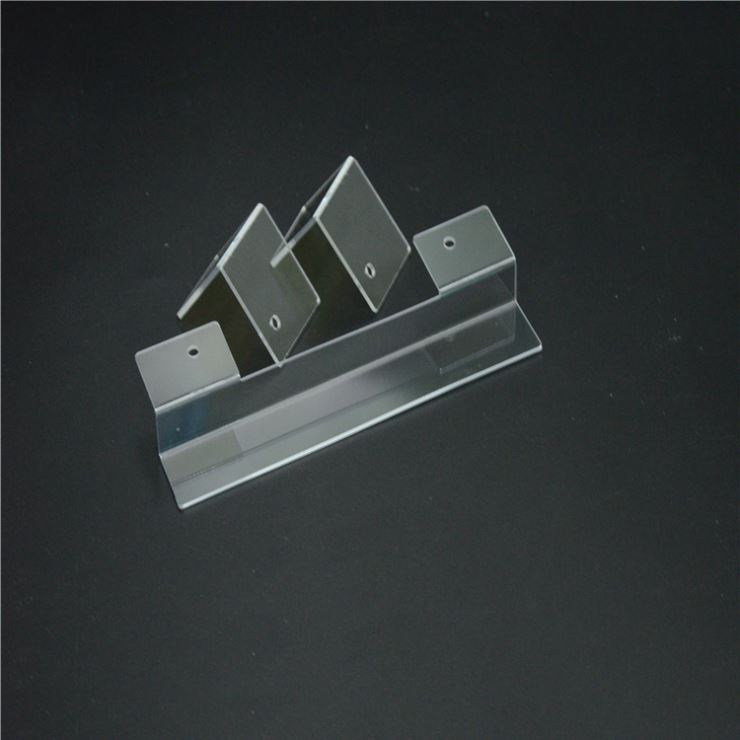
The bending process involves heating acrylic sheet to soften it, bending it to the desired angle, and allowing it to cool and set, creating three-dimensional shapes. Bending angles are adjustable from 0 to 180 degrees, suitable for acrylic light boxes, display cases, protective covers and bent frames. Key control points are heating temperature and bending angle, avoiding sheet cracking and deformation. For batch bending scenarios, hot bending machines and forming molds enable standardized production, with bending angles controlled by forming molds. The vast majority of hot bending involves single-line or parallel-line bending, with complex shapes potentially requiring multiple bending combinations.
Bonding Process
When custom product dimensions exceed single acrylic sheet specifications, or when splicing complex shapes is required, bonding processes become necessary. The core requirement is achieving seamless bonding, ensuring that bonded joints are transparent, strong, leak-proof and not prone to adhesive failure. During bonding, joint surfaces require pre-treatment including cleaning and sanding, with precise control of adhesive quantity to avoid bubbles, adhesive failure and joint misalignment issues. Common adhesives include chloroform, acetone and specialized acrylic adhesives, with professional blended formulations recommended for critical applications to achieve optimal results.
Polishing Process
Polishing is the finishing touch in acrylic fabrication, primarily used to treat cut edges and surfaces after cutting, engraving and bonding, removing burrs, scratches and bubbles to achieve transparent, smooth and glossy acrylic surfaces and edges, elevating product quality. Cloth wheel polishing is suitable for fine polishing of acrylic surfaces and edges, using cloth wheels with polishing compound to achieve high-gloss mirror finish. Flame polishing uses high-temperature flames to quickly sweep across acrylic cut edges, causing surface material to momentarily melt and recrystallize, achieving transparent and smooth edges, but requires controlled duration and distance to avoid sheet deformation. For CNC-machined acrylic, when cutting parameters are properly set, machined surfaces can achieve near-mirror finish without additional polishing.
Screen Printing and UV Printing
Screen printing and UV printing are used to add text, patterns and colors to acrylic surfaces. Screen printing is suitable for high-volume standardized pattern printing, offering low cost and full color saturation. UV printing supports full-color high-precision printing, capable of printing complex patterns and gradient effects without plate-making, suitable for small-batch multi-variety custom orders. The two processes can be flexibly selected based on application requirements or used in combination.
3. Technical Considerations for Acrylic Sheet Processing
In CNC machining and mechanical processing of acrylic sheet, the following technical considerations require special attention.
Cutting Temperature Control
Acrylic is a thermoplastic plastic, and the core challenge during processing is that high temperatures can cause softening and melting, leading to material adhesion to cutting tools and built-up edge formation, affecting surface quality. The core control principle is high spindle speed, medium feed rate and small depth of cut to reduce cutting temperature. Recommended spindle speed is 15,000 to 24,000 rpm, feed rate 500 to 1,500 mm per minute, and depth of cut 0.5 to 1.5 mm per pass. Air cooling is the preferred cooling method, using high-pressure air to continuously blow the cutting area to remove chips and heat, with liquid coolants not recommended as acrylic can produce white haze when exposed to water, affecting surface finish.
Tool Selection
Sharp carbide tools should be selected, avoiding high-speed steel tools. For contour milling and surface processing, single-flute or double-flute spiral end mills are recommended, with helix angle suggested at 30 to 45 degrees, with sharp edges reducing cutting resistance and heat generation. For large surface processing, diamond-coated end mills offer wear resistance and lower cutting temperatures. For drilling, three-flute drills or solid carbide drills are recommended, avoiding standard twist drills which can cause edge chipping at hole openings. For engraving fine patterns, small-diameter ball end mills or flat-bottom engraving bits are recommended, with tip radius not exceeding 0.5mm to ensure detail clarity.
Workholding Methods
Acrylic sheet has relatively low rigidity, and improper workholding can easily cause processing deformation. Vacuum workholding is suitable for large-area thin sheets, using vacuum suction cups to secure sheets to the work table, leaving no workholding marks and ensuring flatness. Clamp workholding is suitable for thick sheets or small-sized sheets, with clamps requiring rubber pads or thin wood sheets to avoid surface damage, while clamp positions must avoid tool paths to prevent interference.
4. Acrylic Sheet Installation and Daily Maintenance
Proper installation and daily maintenance are crucial for extending the service life of acrylic sheet.
Installation Considerations
Acrylic sheet used outdoors must account for thermal expansion and contraction effects, with linear thermal expansion coefficient approximately 6.5×10⁻⁵ per degree Celsius. It is recommended to reserve 3 to 5mm of expansion gap per meter of length during installation. Special screws and rubber washers should be used for sheet fixation, avoiding direct drilling which may cause stress concentration and water leakage risks. For embedded installation, the sheet edge should extend at least 25mm into the fixing frame. Before installation, the protective film at the sheet edge and surrounding 5 to 10cm range should be removed to ensure good bonding between sealant and acrylic sheet. The protective film should be retained during construction and only removed upon project completion to prevent scratching and contamination. The sheet surface must not be scratched during handling and installation, as sharp tools can easily cause permanent marks.
Cleaning and Maintenance
For daily cleaning of acrylic sheet, use soft cotton cloth or microfiber cloth with neutral cleaner or specialized acrylic cleaner, gently wiping in circular motions, avoiding forceful scrubbing. Avoid using cleaners containing alcohol, acetone, benzene or strong alkaline components, as these chemicals can attack the acrylic surface, causing whitening, cracking or loss of gloss. For stubborn stains, dilute neutral cleaner and gently wipe with soft cloth, never using steel wool, stiff brushes or any abrasive cleaning tools. For acrylic sheet used outdoors long-term, comprehensive cleaning every 3 to 6 months is recommended, promptly removing dust, bird droppings and other contaminants to prevent long-term surface corrosion.
Scratch Repair
If minor scratches appear on the acrylic sheet surface, they can be repaired through polishing. For superficial scratches, manual polishing with specialized acrylic polish and soft cloth can eliminate them. For deeper scratches, sanding with progressively finer grit sandpaper is required, followed by cloth wheel polishing to restore gloss. For severe damage, sheet replacement is recommended to ensure optical performance and safety.
Storage and Transportation
Acrylic sheet should be stored in dry, ventilated, light-protected locations, avoiding direct sunlight and high-temperature environments. Sheets should be stored flat on smooth support surfaces to prevent bending deformation from gravity. During transportation, sheets should remain horizontally positioned, avoiding impact and friction, with specialized packaging materials protecting sheet surfaces.
5. Quality Certifications and Warranties
High-quality acrylic sheet products should pass relevant quality certifications. At the national standard level, products should comply with the technical requirements of GB/T 40006.12-2025 for PMMA materials. For international certification, export products may apply for EU CE certification and US UL certification. Flame retardancy ratings can achieve UL 94 HB or higher according to customer requirements. Most professional manufacturers provide 5 to 10 years of product quality warranty, with some high-end cast sheet brands offering over 10 years of outdoor weather resistance performance guarantee.